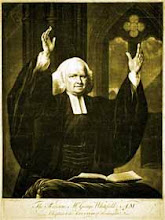
Please pray for our ministry in downtown Naperville. We have been preaching here for a few years now. To GOD be the Glory!!! Here is some Video of some Open Air Preaching. Click on Link Below
Preaching Naperville 8
Sunday, August 3, 2008


Repentance By James Petigru Boyce

CHAPTER XXXIII
REPENTANCE.
The Scripture doctrine of Repentance is to be learned in part from the meaning of the original Greek word used to express it, and in part from its application to a matter which is within the sphere of morals.
I. There are two forms of words used in the New Testament which are translated repent and repentance.
Only one of these is used of the repentance associated with salvation from sin. This is the verb metanoeo, and the corresponding noun metanoia. The other verb is metamelomai, the noun of which does not appear in the New Testament, but occurs in the Septuagint in Hosea 11:8. The verb is used in the Septuagint in Psalm 110:4; and Jer. 20:16. It is also the word used in the New Testament in Matt. 21:29, which says of the son who had refused to obey his father's command to work in the vineyard, "afterward he repented himself and went." It likewise is found in Matt. 21:32 and 27:3, this latter being the case of Judas. Paul uses it in Rom. 11:29; and 2 Cor. 7:8, 10. It is also the word used in Heb. 7:21. In all other places, translated repent and repentance in the New Testament, the original is metanoeo or metanoia. This word means to reconsider, to perceive afterwards, and hence to change one's view, mind, or purpose, or even judgement, implying disapproval and abandonment of past opinions and purposes, and the adoption of others which are different. In all cases of inward change there is not necessarily a change of outward conduct, nor is such inward change accompanied by regret. These results would flow from the nature of that about which that change has arisen.
We arrive, therefore, at the meaning of Christian repentance partly through the meaning of these Greek words, but also partly because it is exercised about a question of morals. It is seen that it involves a change in the outward life because such change is a result of the change of inward opinions. It also includes sorrow for sin because a change of view as to the nature of sin and of holiness must be accompanied by regret and sorrow as to the past acts of sin.
The word metamelomai means to change one's care, to regret; the idea of sorrow always accompanying it.
The two words are nearly synonymous in their secondary meaning, and each is used in this secondary meaning in the New Testament. Metanoeo, however, traces the feeling of sorrow and the change of life back to an inward change of opinion and judgement as to the nature of sin and holiness, and of the relations of man and God. It is perhaps on this account that it is exclusively used for true repentance in the New Testament. This is not simply sorrow, or remorse, which may pass away, or lead in despair to other sins, or fill the soul with anxiety' but a heartfelt change in the inward soul towards God and holiness, which is lasting and effective, and which may be associated with peace and joy in believing.
II. To set forth explicitly what Christian Repentance is, it may be stated that it includes
1. An intellectual and spiritual perception of the opposition between holiness in God and sin in man. It does not look at sin as the cause of punishment but abhors it because it is vile in the sight of God and involves in heinous guilt all who are sinners.
2. It consequently includes sorrow and self-loathing, and earnest desire to escape the evil of sin. The penitent soul does not so much feel the greatness of its danger as the greatness of its sinfulness.
3. It also includes an earnest turning to God for help and deliverance from sin, seeking pardon for guilt and aid to escape its presence.It is also accompanied by deep regret because of the sins committed in the past, and by determination with God's help to avoid sin and live in holiness hereafter. The heart heretofore against God and for sin is now against sin and for God.
From these facts it will be seen that
(1.) The seat of true repentance is in the soul. It is not of itself the mere intellectual knowledge of sin, nor the sorrow that accompanies it, nor the changed life which flows from it; but it is the soul's apprehension of its heinous character, which begets the horror and self-loathing which accompany it, and the determination to forsake sin which flows from it.
(2.) That true repentance is inconsistent with the continuance in sin because of grace abounding.
(3.) That true repentance consists of mental and spiritual emotion, and not of outward self-imposed chastisements. Even the pious life and devotion to God which follow are described not as repentance, but as fruits meet for repentance.
III. The Scriptures teach that the author of true repentance is God operating by truth upon the renewed heart.
Acts 5:31. Christ is said to have been exalted "to give repentance to Israel, and remission of sins.
"Acts 11:18. "Then to the Gentiles also hath God granted repentance unto life.
"The means used is the preaching and other exhibition of the truth. Repentance like faith comes through the hearing of the word. By this men are exhorted to that duty, and gain the knowledge of the truths taught by God, through spiritual apprehension of which men are led to the truth.
Friday, August 1, 2008
I Can't Repent

Ichabod S. Spencer
ONE of the most solemn assemblies that I have ever seen, was convened on the evening of the Sabbath, in a private house. It was an inquiry meeting; at which more than a hundred persons were present, the most of them young or in middle life. The structure of the house was rather peculiar. There was a spacious hail, about ten feet wide and about forty feet long, extending from the front door along the side of three parlors which opened into it, as well as into each other; and at the rear part of this hail was a staircase extending to the second story of the house. Moveable benches were introduced into this hail, and placed along each side of it, to afford seats for those who attended this meeting, and who could not all be accommodated in the parlors. After the meetings had been continued in this place for a few weeks; it became manifest, that the hail was the preferred place. As the different persons came in and took their seats ‘where they pleased, the seats in the hail would be filled, and then the stairs would be used as seats entirely to the top, and then the upper hail would be occupied, and finally the parlors I was accustomed to stand, while addressing the assembly, in one of the doors opening from the hail into the parlor, where my eye had a full view of all those in the hail, on the stairs and in one of the parlors. Besides a general exhortation, it was my ordinary custom to speak to each individual, passing from one to another. And all those in the hail and on the stairs could hear every word, which I uttered in this conversation, and the most of what any one said to me. And for these reasons, as I supposed, the persons who resorted there would choose the hall or the stairs. This listening of others, to what passed in conversation betwixt any one individual and myself, was never very pleasant to me. I should greatly have preferred to converse with each one alone; as there would have been less restraint on their part, and on my own, more certainty, that what I was saying would be truly applicable and would not be applied by any one, for whom it was not intended. And besides this, individuals would sometimes make expressions to me so erroneous, that I was unwilling others should hear them, lest they might be injured by it. To avoid this, I used to speak in a low tone of voice; and if the expressions of any individual were becoming such, as I feared might be injurious; I usually broke off the conversation suddenly, by saying, I will call and see you to-morrow.
On the evening, to which I now allude; all the seats were filled, and three persons were seated on each stair entirely to the top, and many had found their place in the hail above. It was a calm and mild summer evening; and perfect stillness reigned over the crowd assembled there, unbroken except by the long breathing or the deep sigh of some pensive soul. I thought I had never seen so still, so solemn, and thoughtful an assembly. I closed the front door, after all had entered, and took my stand in my accustomed place. I hesitated to speak. I was afraid to utter a word. It seemed to me, that anything I could say would be less solemn, impressive, instructive, than that tomb-like silence in an assembly of so many immortal souls, each visited by the Holy Spirit. I stood, for some time, in perfect silence. The power of that silence was painful. The people sat before me, like statues of marble, — not a movement, — not a sound. It appeared as if they had all ceased to breathe. I broke the silence by saying slowly and in a low voice: — “Each one of you is thinking of his own immortal soul and of his God.” Again I paused for the space of an entire minute; for I was overawed, and knew not what to say. Then falling on my knees, I commenced prayer. They all spontaneously knelt. After a short prayer, I proposed to speak a few words to each one of them, as far as it was possible; and requested all of them, except the individual with whom I should be conversing, to be engaged in reflection or in silent prayer to God. Passing rapidly from one to another, I had spoken to all those in the parlors and in the hall, till I had reached about the middle of it, where every word spoken could be heard, by the whole assembly. Coming to a man, about thirty years of age, whom I had seen there three times before, I said to him: — “I did not expect to see you here to-night. I thought you would have come to repentance, before this time; and would have no occasion any longer to ask, what shall I do to be saved?”
“I can’t repent,” said he, (with a sort of determined and despairing accent, and so loudly as to startle us all.) Instantly, I felt sorry for this expression. But I thought it would not do to avoid noticing it, and leave it sounding in the ears of so many impenitent sinners. I immediately answered, as I stood before him, as gently and yet solemnly as I could: —“What an awfully wicked heart you must have! You can’t repent! You love sin so well; that you cannot be sorry for it — you cannot forsake it — you cannot hate it! — You must be in an awful condition indeed! You are so much the enemy of God; that you cannot be sorry for having offended him — you cannot cease to contend against him — and even now, while you are sensible of the impropriety and unhappiness of it, you cannot cease to resist the Holy Spirit, who strives with you to bring you to repentance! — You must have an awfully depraved heart!”
“I can’t repent,” said he again, (with an accent of grief and intolerable vexation) — “I can’t repent, with such a heart!”
“That means,” said I, “that you have become too wicked to desire to become any better; for nothing but wickedness makes repentance difficult. And then, you just plead one sin, as an excuse for another — the sin of your heart, as an excuse for the continued sin of your heart!”
Still he insisted. “I can’t repent! I should if I could!” — (and the tears rolled down his cheeks, of which he seemed to ho utterly unconscious, as well as unconscious of the presence of any one but myself.)
“You would if you could,” said I, “is only a self-righteous and self-justifying excuse. Your deceitful heart means by it, that you are not so wicked as to continue in your impenitence willingly. It means that you are willing to repent, but you cannot. You are deceived. You are not willing. You think you are, but you are in an error. You never will be willing, unless God shall verify in you the promise, ‘My people shall be willing in the day of my power.’ In that power lies your only hope, as I have told you before, when I urged you to pray. If you are willing to repent, what hinders you? I am willing you should repent. All of us here are willing. Every angel in heaven is willing you should repent. Christ who died to redeem you is willing. God the Father is willing. The Holy Spirit is willing, who, at this moment strives with you to bring you to repentance. What hinders you, then? Yourself only! And when you say you can’t repent, you mean that you are not to be blamed for coming here to-night with an impenitent heart. You are woefully deceived! God blames you! The whole Bible blames you! Your own conscience, though you strive to silence it, blames you! — This excuse will not stand!”
“I can’t repent!” said he again, (in a harsh, vociferating voice, as if in anger.)
“Then God can’t save you,” said I; “for he cannot lie, and he has said the impenitent shall be destroyed! You say you cannot repent. He has not said so. He commands you to repent.”
He replied, with much agitation, but in a subdued tone: — “I am sure I have tried long; and my mind has been greatly tormented. All has done no good. I do not see as I can repent!”
“Other people have repented,” said I. “There are a great many penitents in the world. I find there are some here to-night, who think they have come to repentance, since they were here last Sabbath evening. One of them told me then, very much the same thing you tell me now, that it did not seem to him he ever could turn from sin; but he has found out he can. As to your having tried so long, the length of time will not save you if a man has got his face turned the wrong way, the longer he goes on, the worse off he becomes. He would do well to stop, and turn about. Such is the call of the Bible: ‘Turn ye, turn ye, for why will ye die? Repent, and turn yourselves from all your transgressions, so iniquity shall not be your ruin. Let the wicked forsake his way, and the unrighteous man his thoughts, and let him return unto the Lord.’ Other people have turned to God, and you ought to. But your mind has seized on the idea of your trying and your trouble, and you make an excuse and a self-righteousness of them.”
“Do you think I am self-righteous?” said he.
“I know you are. That is your grand difficulty. You have been trying to save yourself. You are trying now. When you tried to repent, your heart aimed after repentance, as something to recommend you to God, and constitute a reason why he should forgive and save you. It was just an operation of a self-righteous spirit. It was just an attempt to save yourself, to have your religion save you, instead of relying by faith upon Jesus Christ, to be saved from wrath through him. This is precisely the case with every impenitent sinner. The error is one. The forms of it may be various; but in all cases it is substantially the same thing. St. Paul has given a perfect description of it: ‘going about,’ (from one thing to another, from one device or attempt to another,) ‘going about to establish a righteousness of their own, they have not submitted themselves to the righteousness of God; for Christ is the end of the law for righteousness to every one that believeth.’ One man tries to establish a righteousness of his own, out of his reformations; another one, out of his duties; another, out of his painful attempts or painful convictions; as you just now mentioned your own torments of mind. It is evident, that you are trying to be righteous before God, through your pain — and your attempted penitence. And if you should find any peace of mind in that way; it would only be a deception, not an item of religion in it. You ought to betake yourself to the Lord Jesus Christ, a poor, guilty, undone sinner, to be saved by him alone — saved by grace. You ought to go to him, just as you are, to be washed in his blood, to be clothed in his righteousness, to be sheltered from the thunders of God’s eternal law, in the security of his all-sufficient atonement. You ought to flee to Christ, like the man-slayer to the city of refuge, before he is cut down by the sword of the avenger of blood. You ought to go instantly, like the prodigal to his father, in all his poverty, starvation, and rags, as well as guilt. You ought to cry, like Peter sinking in the waves, “Lord, save me.” But instead of this, you are just looking to yourself, striving to find something, or make something in your own heart, which shall recommend you to God. And in this miserable way, you are making salvation a far more difficult matter, than God has made it. You have forgotten the free grace of the gospel, the full atonement of Jesus Christ, by the sacrifice of himself.”
“But,” said he, “I can’t repent and come to Christ, of myself.”
“I certainly never said you could; and never wished you to think you could. In my opinion, God does not wish you to think so. And if you have found out, that you cannot repent of yourself, aside from divine aid, I am glad of it — you have found out an important truth. Most certainly God does not tell you to repent of yourself. He tells you, that ‘Christ is exalted to give repentance.’ He says to every sinner, ‘Thou hast destroyed thyself, in me is thy help: let him take hold on my strength that he may make peace with me, and he shall make peace with me.’ On the ground that they need it, he has promised ‘the Holy Spirit to them that ask him.’ God never expects you to repent, without divine aid, but with it. He knows you are too wicked to do it, that you are without strength, helpless, undone, a lost sinner! — And here lies the very heart of your error. You have been trying to repent, in a way that God never told you, just by your own powers, instead of trying to get God to have mercy upon you, and save you by his help. You have been looking to the powers within you, instead of looking to the aid above you. You have trusted to yourself, instead of trusting yourself to the grace of Christ. And that is the very reason why you have failed; and now you complain, that you cannot repent; while, in reality, you have exactly the same sufficiency, as the penitent all around you. What has been their help, may be your help. And the sooner you are driven off from all that self-seeking and self-reliance, the better it will be for you. You are in the double error of undervaluing the character of God, and over-valuing your own. God is more merciful and more gracious, than you think him to be. He is more ready to save you. And when he commands you to repent, he does not wish you to forget, that all your hope lies in the immediate aid of his Holy Spirit. Nor does he wish you to attempt to dispense with that proffered assistance, by your not believing, that you are as utterly helpless as you really are. He does not tell you to rely upon your own shattered strength; but you have done so. And when you have failed, you then turn round and complain, that you ‘can’t repent.’ You reject his offered help — the help of the omnipotent Spirit. And for this reason, you will be the more criminal, if you do not repent. That Divine Spirit is your only hope. If he leaves you to yourself, you are lost — eternally lost! Tread softly, my dear friend! The ground whereon thou standest is holy ground! Let not the Holy Spirit, who presides over the souls here this evening, bear witness against you in the day of the final judgment, — ‘because I have called and ye refused!’ You can repent; just in the way that others repent; just because God is your help. Trust him; and rely upon yourself no longer.”
As I was saying these things, he appeared to become much less affected, but much more thoughtful. His tears and his agitations ceased; and he seemed to hang upon my lips, as if he was listening to some new wonder. When I had done, all was hushed as death; and in a deliberate, subdued, and solemn tone, he broke that expressive silence, saying: — “I hope, my God will help me.”
“Let us pray,” said I; — and a short prayer, pleading for God’s help, closed the exercises of the evening.
I afterwards found numerous reasons for believing, that that was one of the most profitable religious exercises, that I ever attended. Among others was the case of my friend, whose expression had drawn me somewhat out of my proposed mode of conducting the exercises of the evening. He became, as he hoped, a true believer. He stated to me the exercises of his mind, his repentance, his faith in Christ, his peace and hope, and his reliance upon the Holy Spirit. His mind appeared to seize upon the great truths of the gospel, almost without emotion. He had no ecstacy, no exultation, no joy. He had only peace and hope. lie told me, that his agitations had all been useless to him; that they were not faith and did not lead to faith; and that he thought “sinners ought to attend to the calls of God, in a believing and business manner.” And when I asked him what had kept him from Christ so long, he replied: “I was trying to make myself better — to have a religion instead of trusting in Christ. What you said to me that night, showed me my mistake; and I went home with a deeper sense of my dependence, and a clear view of the free grace of God to sinners, through the redemption of Christ.”
About six months after this he united with the church, and has continued to manifest an established and uniform faith.
To cut off the sinner from all reliance upon himself, his merits and his powers; and throw him, naked and helpless, into the hands of the Holy Spirit to lead him to Christ in faith; should be the one great aim of the ministry.
Sinners certainly ought to repent, for God commands them to repent. But in my opinion, he does not design to have them understand his command, as having respect only to their own ability to repent, and not having respect to the proffered aids of the Holy Spirit. Such aids constitute one grand ground on which his command is obligatory, and sweep away every possible excuse. No man ever did repent without the Holy Spirit, or ever will; and this is no small amount of proof that no man ever can. Nothing seems to be gained by making a sinner believe that he is able to repent without divine assistance. Such a belief will be very likely to mislead him to a reliance upon his own shattered strength And as to his conviction of criminality for not coming to repentance, surely there is strong ground for such conviction, since God offers him all the ability he needs, — in me is thy help, — let him take hold on my strength that he may make peace with me.
Author
Ichabod Smith Spencer was born in 1798 in Rupert, VT. He was unconverted until just after his 18th birthday. The previous year his father died and this left him utterly devastated. “It is highly probable that his father's death so deeply felt, and so great a trial, was sanctified to his soul, and overruled to lead his mind and heart, so dark and trembling, to the only true ‘Rock of hope and support.’ It was more than a year, however, after this event occurred, before the grace of God changed his heart, and turned his feet into the way of life.”
He was converted in Granville, NY and was educated at schools in the upstate NY region. He became a school teacher, and his fame grew to the place that he was in great demand. In fact, in 1830 he was called to be President of the University of Alabama, and in 1832 the President of Hamilton College of NY. He refused these both as the Lord had by this time called him to preach. He was called to serve as colleague-pastor of the Congregational Church in Northampton, MA in 1828, the church made famous by Jonathan Edwards.
He refused a call to Park Street Church, Boston, the largest in New England at this time because of his tender health. Later in 1832 he accepted the call to the Second Presbyterian Church of Brooklyn, NY. This was a church planting effort with no building and about 40 people. He remained at this post the rest of his life, thus spending 22 years at this church. By the time of his death the church had grown to be one of the largest and most influential in all of NY State. His biographer states that he was one of the greatest preachers the American Pulpit produced during that era. At the same time, his greatest gift and legacy was in the pastoral ministry. He was a true shepherd.
He was a man fully committed to the doctrines of grace, and he constantly preached upon the themes of total depravity, sovereign grace, free justification by faith in Christ alone, the certainty of the judgment to come, the greatness of the mercy and love of God. He preached these themes both publicly and from house to house. As great and gifted a preacher as he was, and as effective as his sermons were to awaken sinners, it was his personal ministry that was most mightily blessed by God as he dealt with anxious inquirers.
This article is taken from Spencer's incredible two-volume book, A Pastor's Sketches. [The personal volumes I own were printed in 1853. - Ed.] However, they have been recently reprinted in paperback by Solid Ground Christian Books.
The Only Way By: D.Martyn Lloyd Jones

D. Martyn Lloyd-Jones
Ephesians 6:10, 11 “Finally, be strong in the Lord, and in the strength of his might. Put on the whole armor of God, that ye may be able to stand against the wiles of the devil.”
We come now to the detailed consideration and analysis of this most important statement: ‘Finally, my brethren, be strong in the Lord, and in the power of his might. Put on the whole armour of God, that ye may be able to stand against the wiles of the devil.’ The Apostle is exhorting these Ephesians to realize something of the nature of the battle in which we are all inevitably engaged as the result of being Christians. Indeed this battle exists whether we are Christians or not. The teaching of the Bible throughout is that this world in which we live is a battle-ground, is a place in which we literally have to fight for our souls, to fight for our eternal welfare.
The Apostle gives these Ephesians some very specific instruction with regard to the nature of that battle, and as to the only way in which it can be waged successfully. Clearly the exhortation is primarily for Christian people; his whole argument is based upon that consideration. At the same time, however, it has a message for everyone; for it is true to say that this is a conflict which affects all persons whether they realize it or not. Those who are not Christian do not understand their own world at this present time; they cannot understand why it is as it is, and why various things are happening. So while we are looking at the Apostle’s instruction with regard to the way to fight this great battle, we shall, incidentally, be seeing the exposure of the complete failure of all who are not Christian even to understand their problem, and still more their failure to deal with it in an adequate and successful manner. In other words, we are confronted here with the Apostle’s teaching as to the way in which we can fight successfully the forces that are arrayed against our souls and their highest and best interests.
Perhaps the best way to approach this subject, and to put it into its modern setting in order that we may realize the relevance of all this to life as it is today, would be for me to quote some words which I read in a newspaper recently. A certain senior lecturer in education in a college in Great Britain said this: ‘The Church should take a firmer lead in moral matters; woolly generalizations must go. The Church must give answers to real modern problems, including sex. While the religious basis offers the best prospect of success it should never be regarded as the only way to teach morality, otherwise we would become narrow-minded.’ This is a very typical statement of the attitude of so many in the world at the present time to the problem which is dealt with here by the Apostle Paul. I refrain from making certain obvious comments upon it, for I am interested in it simply because I think it will help us to understand the Apostle’s teaching. Setting detailed considerations aside for the moment, we shall consider the Apostle’s teaching in general as it gives an answer to this kind of statement. The lecturer uses the word ‘woolly’ - he does not want ‘woolly generalizations’. Yet, poor man, his own statement is nothing but a woolly generalization! However, let us ignore that. It is one of the typical modern clichés - ‘The Church must do this and not do that; it is about time the Church . . .’ We are all familiar with such remarks.
Statements of this type are invariably based on an ignorance of what the Church is, and what is the nature of her teaching. In the Ephesian passage before us, the Apostle is really saying that what he is teaching is the only way to deal with the problem of conflict. The lecturer says that ‘while religion offers the best prospect of success, it should never be regarded as the only way to teach morality, otherwise we would become narrow-minded’. The Apostle, on the other hand, specifically and openly says that the way he propounds is the only way to victory. That is why there is such a note of urgency in his teaching, and why, as I have said, it is a kind of trumpet-call: ‘Be strong in the Lord, and in the power of his might. Put on the whole armour of God.’ If you fail to do this you are defeated, you are already finished before you start. The Apostle’s is the only way. We make no apology for saying so. We are not at all afraid of this charge of ‘narrow-mindedness’. When you know that to take a certain course is the only cure for a disease, that it is specific, that it cures it to a certainty, and that nothing else can do so, you do not regard it as being narrow-minded to use that remedy and to refuse to waste time with other remedies. That is not being narrow-minded, it is just being sensible and sane and rational.
Every kind of specialization is in this sense narrow. We are living in an age of specialization; but I have never heard anyone suggesting that an atomic scientist is narrow-minded because he gives the whole of his time to the science of the atom. Of course not! That is just common sense, that is wisdom; it is to concentrate on what matters, what is powerful, what really does yield results.
But let me state my thesis positively. The claim of the Christian faith quite openly and specifically is that it - and it alone - can deal with this problem. The Gospel of Jesus Christ is not one of a number of theories and teachings and philosophies confronting the world. It is unique, it stands absolutely alone. The Bible is not one book among many books. It is God’s Book, it is a unique Book, it is the Book, standing apart from all the others. We must emphasize this because it is the whole basis of the Christian faith. The Church is not one of a number of institutions; she claims to be quite unique as an institution; she says she is the body of Christ. We speak because we have a revelation. The Bible does not provide us with a theory, a speculation, an attempt to arrive at truth. The position of all the men who wrote the books of the Bible is akin to what the Apostle says about himself in the third chapter of this Epistle to the Ephesians: ‘For this cause, I, Paul, the prisoner of Jesus Christ for you Gentiles, if you have heard of the dispensation of the grace of God which is given me to you-ward: how that by revelation he made known unto me the mystery’.
The Apostle does not address the Ephesians saying: ‘Listen, many people have been offering you advice and teaching; well, I have studied a great deal also, and I have come to this conclusion; so this is what I suggest.’ That is not the case at all! He says, ‘a revelation was given to me’. It is not a message devised by Paul; it was given to him by the Lord Himself, the Lord of Glory, on the road to Damascus. He apprehended him and arrested him and said, ‘I am going to send you as a minister and a witness to the people and to the Gentiles’ (Acts 26:16-18). Divine communication is the whole basis of the Christian faith. It is therefore foolish to regard that faith as one amongst many. No, as the Apostle Peter stated it once and for ever at the very beginning of the Church when he and John had been arrested and were arraigned before the authorities in Jerusalem, ‘There is none other name under heaven given among men whereby we must be saved’ (Acts 4:12). None other! There is not even a second! He is the only One, and He is enough; you do not need any addition. This and this alone! And that note is found in everything the Apostle says. That is why he is so urgent, so insistent as he presses his message upon them. This is the only hope. Were it not for this there would be nothing at all. It is a dogmatic pronouncement; and anyone who apologizes for his Christianity, or tries to accommodate it, or to say that it is the best amongst a number, is virtually denying the most essential point in the Christian position.
We must not stop, however, at a mere dogmatic assertion, but must proceed to demonstrate it. I suggest that if you take the evidence of history you will be driven to the conclusion that it is the only way. Go back, review the history of the centuries as far as it is known, look at secular history-books, take history as it is recorded in the pages of the Old Testament, and you will find beyond any doubt or question that the asseveration of the Apostle is fully and completely substantiated.
You find it in miniature, as it were, in the story of the children of Israel themselves. Their story is that whenever they were true to God, and worshipped Him, and obeyed His commandments, all went well with them; they were a pattern and an example to the nations, and highly successful; but every time they turned away from God and looked at the idols of other nations, or took up their religion or their philosophies, everything went wrong with them. It is the principle that emerges as you read through the pages of the Old Testament.
But the most impressive statement of all, the perfect summary of this entire argument, is provided by the Apostle Paul in the Epistle to the Romans, beginning at verse eighteen and going on to the end of the first chapter. He says that as nations and peoples in supposed ‘wisdom’ have turned their backs upon God the Creator, they have always become fools - ‘Imagining themselves to be wise, they became fools’. Then he proceeds to give an account of their terrible moral degradation, the perversions and obscenities into which they fell. ‘Ah,’ says our modern lecturer, ‘the Church must speak specifically about sex . . .’ Very well, the Church does so! If you want to know what she has to say, read the second half of the first chapter of the Epistle to the Romans, and you will find an account of all the modern perversions, all the foulnesses that are disgracing life at the present time. They have occurred many times before. But when has that happened? It is always when man in his supposed wisdom has turned from the Creator and has given his worship to the creature. The whole history of the human race substantiates what the Apostle claims. Before Christ ever came into the world everything else had had its opportunity. The Greek philosophers had flourished, the greatest of them had already taught their beliefs. But they could not deal with the problem of sin; their teaching was not adequate and had already failed. There was also the great Roman Empire with its system of law; but there was a canker at the very heart of the Empire; and it finally collapsed, not because of the superior prowess of the Goths and the Vandals and the Barbarians, but because of the moral rot at its very heart. That was the cause of the ‘Decline and Fall’ of the great Roman Empire, as is admitted by all. In other words, history substantiates the Apostle’s teaching.
But, unfortunately, modern history, contemporary history, proves my thesis also. This is where we see the relevance of this teaching. And how up-to-date it is! how it speaks to us at this present time! We have read in our newspapers during the last week statements such as that of the Medical Officer of Health for the City of Edinburgh, and of various other Medical Officers of Health who have been giving their annual reports. ‘The Church,’ says the lecturer I have quoted, ‘must supply an answer to the problem of sex.’ What the Medical Officers of Health are reporting is that there is an appalling increase in venereal diseases and especially amongst adolescents and juveniles. Such is the problem confronting us. This moral problem has become the most acute and the most urgent - there is a serious breakdown of morality.
They tell us that we are confronted by an amoral generation, by people who do not seem to have a moral sense at all! But let us not forget that this situation must be considered in the light of the exceptional educational facilities and opportunities and advantages which have been available since 1870. This man who tells us that religion is not the only solution is a lecturer on education, and there has been an abundance of such lecturers and lectures since 1870. And yet here is our great problem - immorality and vice and evil! The world has multiplied its institutions for dealing with the moral and social problems in this present century more than ever before. Clubs, institutions, cultural agencies, have been multiplying one on top of another. Never has the government of any country spent so much in an attempt to deal with moral and social problems as has been done in this country in the present century. And yet here are these men saying one after another that moral standards are deteriorating almost hourly, week by week, and that the problem is becoming appallingly difficult of solution. They are asking what can be done? The lecturer in question says that things have come to such a pass that the Church must do something, the Church must begin to speak. But then he spoils it all by telling the Church what she is to say; and what he says, as I shall show, is completely wrong!
What then is the position? It is as religion has declined in this century that the moral problem has become more acute. Let us remember that we have two lots of statistics. There are the statistics of the Medical Officers of Health, proving that all these terrible problems and diseases are on the increase. But there are other statistics, church statistics. The number of church members is going down year by year; the number of adherents is declining; the number of Sunday School scholars grows less and less. The two things go together. As religion has gone down all these other things have gone up. I am simply saying all this to justify the assertion of the New Testament that its teaching is the only way, and that there is none other. The modern situation is proving it before our eyes, and yet our education lecturer says that Bible teaching must not be the only teaching. He says that ‘perhaps it will give the best hope of success’, but would be ‘narrow-minded’ if we said that this is the only answer and solution. Well, let him mention the others! What has he got to mention? Education? We have tried it. Let him mention various clubs. We have tried them also, and cultural agencies. We are still trying them all. How foolish, how ridiculous, to utter these general clichés and not face the facts!
But there is a further reason why this is inevitably the truth; it is because of the nature of the fight in which we are engaged. The whole of past history proves it, the modern position proves it. But apart from that the nature of the fight itself makes this proposition inevitably true. How? Man’s own nature makes a warfare absolutely certain. The fatal mistake made constantly about man is to regard him only as a mind and an intellect; and therefore, the whole basis of secular teaching is that all you need do is to tell men about the evil nature of certain things, and the evil consequences of doing them, and then they will stop doing them. Conversely, if you tell them to do certain things because they are right and good and true and noble, they will jump at them and do them. What ignorance of human nature!
I am not alone in speaking thus. I was interested recently to read a review of part of the autobiography of a well-known sceptical, irreligious, modern writer, Leonard Woolf. The review was written by another literary sceptic, Kingsley Martin. But the reviewer, at any rate, had reached the conclusion that the trouble with this whole school to which Leonard Woolf belongs is just this, that they will not see that man in the main is irrational. He used what seemed to me to be a very good illustration. ‘What Leonard Woolf and all his companions, such as Bertrand Russell and others, have always failed to grasp is this,’ he said, ‘that man is a kind of iceberg.’ Standing up above the water is a certain amount, about a third perhaps, which may look very white, but underneath are two-thirds out of sight in the depth, in the darkness. Writers like Leonard Woolf, says Kingsley Martin, do not realize that man is mainly irrational. What he means, of course, is that man is not governed by his mind, his intellect; his understanding, but by desires, impulses, and instincts, by what the psychologists call ‘drives’. These are the things that control and master a man; and the problem which is confronting the world in the present era is that of these instinctive ‘drives’.
All this can be seen on the national and international plane as well as in the case of the individual; and that is what makes all optimistic statements about some world organization that is going to banish war so childishly ridiculous. Nations, like individuals, are not governed by common sense.
If the world were governed by common sense there would never be a war. War is sheer madness, from every standpoint. It is a waste of money, it is a waste of life, it is a childish way of settling a dispute and a problem. How can you settle a problem of government or any other problem by just killing one another? I repeat, war is sheer madness; there is nothing to be said for it. Why then do the nations fight and prepare for war ? The answer is that they are not governed by their minds and intellects but by the two-thirds that is underneath the surface, the part of the iceberg that you do not see - greed, avarice, national pride, the desire to possess and to become greater than others. These are the things that ever cause wars. ‘Whence come wars among you?’ asks James. ‘Come they not hence, even of your lusts, that war within your members ?’ (James 4:1). That is true of the individual as well as of nations; and because it is true it follows that nothing but that which can deal with this hidden powerful two-thirds can really provide a remedy for the situation. It is the claim of the Gospel that it, and it alone, can do so. Nothing else can.
In the next place consider the enemy that stands against us. ‘We wrestle not against flesh and blood, but against principalities, against powers, against the rulers of the darkness of this world, against spiritual wickedness in high places.’ ‘Take unto you the whole armour of God,’ says Paul, ‘that ye may be able to stand against the wiles of the devil.’ Put up all your moral schemes and teachings against the wiles of the devil and he smiles at you in contempt. Of course! How utterly inadequate it all is! We shall elaborate that later.
Furthermore, consider the standard to which we are asked to attain. Christianity not merely tells us to be nice and good and clean and moral. A Christian is not simply a nice respectable person. It is because so many have thought that mere respectability is Christianity that they have left the Church. They say that. such a result can be achieved outside the Church, and point to the nice, good, moral people who are not Christians. And that is a perfectly fair argument. But the answer to it is that that is not Christianity. A Christian is not merely a person who does not do this, that, or the other. A Christian is positive. He is called to ‘hunger and thirst after righteousness’; to be ‘pure in heart’; to be ‘perfect even as your Father which is in heaven is perfect’. That is Christianity! To be like Christ, to live as He lived! And the moment you consider the standard you see how utterly impossible and inadequate are all these other suggestions that are being put forward. We can, therefore, sum it all up by asserting openly, frankly, avowedly, and unashamedly, as the Apostle does here by implication, that this, and this alone, is the only way of victory and of triumph. It was because this is so that the Son of God came into the world. If anything else could have sufficed He would never have come. There would never have been an Incarnation, still less a death upon the Cross, were it not that this is true. ‘The Son of man is come to seek and to save that which was lost.’ This is the beginning and foundation and basis of the Christian position. Christ came because, in a sense, He had to come if there was to be any salvation at all. He came because man had completely failed.
O loving wisdom of our God,When all was sin and shame,A second Adam to the fightAnd to the rescue came.
It was and is the only way, there is no other. Let the world in its supposed wisdom call it ‘narrow-minded’. As long as it does so it will continue to degenerate morally and ethically, and fester in its own iniquity. The Christian way is the only way.
But let us consider a second general point. It is obvious from the statement of the lecturer which we have been considering that Christianity is capable of being misunderstood and this, unfortunately, is something that has kept recurring throughout the centuries. There has been nothing so tragic as the misunderstanding of Christianity and the Christian message. There are people like this lecturer in education who are very ready to say, ‘The Church must make her contribution. Christianity, perhaps, is the best hope we have got. It is not our only hope, but perhaps it is one that is most likely to lead to results, so the Church must play her part.’ Governments are very ready to say this in times of crises. When the problem gets out of hand they ask, ‘Well now, what has the Church to say?’ And they expect the Church to make some general statements which will improve the moral tone of society. The Church must play its part! Yes, but this attitude betrays, as I say, a complete ignorance as to what the message of the Church really is.
There have been two main misunderstandings in this particular context. The first is that Christianity and its message is nothing but a teaching that we ourselves have to apply. This lies at the root of the misunderstanding of the lecturer whose statement we are examining. It is a very old fallacy. It was the real trouble at the beginning of the eighteenth century before the great Evangelical Awakening took place. It was the over-all fallacy of the men who were called Deists, and others. They said that God had created the world like a watchmaker winding-up a watch and then had no further concern with it, except that He had given it a certain moral teaching. So they merely equated Christianity with a teaching and morality which tell people to live a good life. Thomas Arnold, headmaster of Rugby in the nineteenth century, was guilty of exactly the same fallacy: that was his teaching also. It is sometimes known as ‘Public School religion’ and teaches that Christianity is that which makes you ‘a good little gentleman’. You refrain from certain things and you do certain other things. It is just moral, ethical teaching.
Now this is a tragic misunderstanding of the whole position, for it regarded Christianity merely as one teaching among a number of other teachings, for example, those of Plato, Socrates, Aristotle, Seneca, and others who supplied high, idealistic, moral teaching. Christianity is but another, and perhaps the best of them all; so let us give great attention to it. And do not forget that the late Mr Gandhi of recent date held a very exalted and noble teaching; and there are various others. They add to their list of great teachers the name of ‘Jesus’, as they call Him, and He generally comes somewhere about the centre. Some rise superior to Him, others are esteemed His inferiors. But such thinking and talking simply reduces Christianity to nothing but a moral, ethical teaching - just a variant of the theme of ‘Goodness, Beauty and Truth’ to which we are to aspire. It is because such multitudes of people, especially in the present century, regard that as Christianity that the Church is as she is.
Such was the teaching of the theological school called Modernism or Liberalism which came in about the middle of the last century in this country. Its theme was ‘the Jesus of history’. They took out miracles, indeed the entire supernatural element, and the substitutionary atonement. What is Jesus? ‘Ah,’ they said, ‘Jesus is the greatest religious teacher the world has ever known. Listen to His teaching, emulate His example, follow Him; and if you do so you will be a good Christian. Do not bother about doctrines, they are not important; it is Jesus’ teaching that matters.’
So Christianity has been reduced to a moral and an ethical code and teaching. That leads inevitably to failure and to disaster, for it leaves the whole business to us as individuals. I have got to admire the teaching, next I am required to accept it, and then I have to proceed to put it into practice. It is left entirely to me. ‘Ah but,’ they say, ‘look to the example of Jesus.’ Example of Jesus? I know of nothing that is so discouraging as the example of Jesus! As I look at His moral stature, at His absolute perfection, as I see Him walking through this world without sin, I feel that I am already condemned and hopeless. Imitation of Christ? It is the greatest nonsense that has ever been uttered! Imitation of Christ? I who cannot satisfy myself and my own demands, and other people still less - am I to imitate Christ? The saints make me feel ashamed of myself. I read of men like George Whitefield and others, and I feel that I have not yet started. And yet I am told to take this ethical teaching of the Sermon on the Mount, this idealistic social teaching, and to put this into practice! ‘It is so marvellous,’ they say, ‘it will stimulate you; look at Him and follow Him!’
It is not surprising that failure has resulted, and that people have left the Christian Church; it is not surprising that we are faced with a moral collapse in this country, and in all the countries, at the present time; for the non-Christian ethical teaching leaves it all to me, strengthless and powerless though I am. I am like the Apostle Paul by nature and I say, ‘Alas, with my mind I see what is right, but I find another law in my members dragging me down. With my mind I receive and accept and admire the law of God, but there is this other law, this other thing, working within me, and making me captive to the law of sin and death which is within me’ (cf. Romans 7:14-25). There is this third of the iceberg, as it were, above water and it is looking at the sun; but I am aware of the other two-thirds that is dragging me down to the depths and the darkness. ‘O wretched man that I am! who shall deliver me ?’ That is the inevitable position. If Christianity is but a moral ethical teaching it is as useless as all the others. The ‘Christian’ way has always been proved to be useless when it is reduced to such a level.
But Christianity is no mere code of ethics. Our educationalists cannot just turn to us and say, ‘Well now, come along, you representatives of the Christian Church. Do not be narrow-minded, but give us your help, give us your teaching, we want to know what you think about sex, and many other factors in life.’ I answer that what is needed is not what I think about sex, but a power that will deliver a man from being mastered and controlled by it. There is ample knowledge about sex. Alas, people today know far too much about sex; they know much more than their forefathers knew. They are reading books about it - novels, text-books, and so on - and the more they read the worse they get. Their reading only serves to aggravate the problem. It is not knowledge we need; it is power. And that is where your moral ethical systems break down and fail completely. They have no power to offer, none at all. We must beware, therefore, of reducing Christianity to a mere moral, ethical teaching. God forbid that anybody should still be held in that ignorance and blindness! All that teaching has been tried very thoroughly for a hundred years and more, and it has failed completely, both in the case of the individual, and also in the national and international realms.
But I must say a word about the other misunderstanding. Here, again, is an interesting and fascinating story. There have been those who have said, ‘No, it is not just enough to hold this teaching before men and to tell them to get on with it, because the forces against us are too great. We are up against the world and the flesh and the devil. There is all that I am conscious of within myself, and then as I walk about the streets and see the hoardings and the placards and read newspapers, sin is insinuating itself and tempting me. I see it everywhere around me, in advertisements, in dress, and in all that characterizes the life of a great city like London. How can I fight against all this? ‘No,’ they say, ‘there is only one thing to do. If a man is to save his soul and to live a good and pure life he has got to get away from all this, he has got to segregate himself.’
In other words, the second great misunderstanding of the Christian teaching is that which we can sum up under the whole notion of monasticism. Here is a wonderful story. There is something about the people who started the monastic idea which calls forth one’s admiration. At any rate they were men who were serious and concerned about their souls and their lives and their daily living. This was the biggest thing in life to them; so much so that they would give up a profession, they would give up home, they would give up all that had been dear to them and retire into a monastery, there to live what they called the ‘religious’ life. The idea was that the only way in which you could fight this battle was to get away from the enemy as much as possible. Now in that principle, as I shall explain, there is something which is right and true. The Apostle Paul, addressing the Romans in chapter 13 of his Epistle, says, ‘Make no provision for the flesh’. It would be good for all of us if we spent less time reading our newspapers, kept our eyes straight ahead as we walked the streets of London, did not look at certain things, and did not go to certain places. So far, so good! But certain people carried that further; they said that you must get right out of the world. You must concentrate on this alone, you must give up ordinary life and living, and isolate yourself; you must go into a monastery, or become a hermit on top of a mountain, or get away into some cell somewhere; that being the only way of escape. And they did not stop even at that. They said that you have to keep down the body; so you have to fast twice, perhaps three times a week. You have to do other things also, perhaps put on a camel-hair shirt, and in various ways knock down this body of yours and insult it as much as you can. They indulged in what were called ‘flagellations’; they would beat their bodies, scarify their flesh, all in an attempt to overcome these powers that are against us in this great fight of which Paul is speaking. The best description of all this that I have ever read is to be found in a book called The Vision of God, the Bampton Lectures delivered about 1928 by Kenneth E. Kirk. There you will find an account of how this idea came in, and at a very early period in the history of the church. And that same school of thought has persisted ever since.
But that is not Christianity, and for the following reasons. Though you leave the world and all its prospects, and go and live as a monk or a hermit in a cell; though you have left the world, you have not left yourself - the two-thirds submerged part of the iceberg is still with you! You do not leave your sinful nature outside the monastery. Evil imaginations and thoughts are with you still; you cannot get rid of them. Wherever you go they go; yourself, your nature, this part that drags you down will be with you in the cell exactly as it was on the streets of London. Not only so, the evil powers are also there as much as they were when you were living your life amongst other people. ‘We wrestle not against flesh and blood, but against principalities and powers, against the rulers of the darkness of this world, against spiritual wickedness in high places.’ Stone walls do not keep them out, iron bars do not keep them out, locked doors do not keep them out; wherever you are they will be there. They are spiritual, they are unseen, they can penetrate everywhere, and they are with you in your cell. You cannot get rid of them. And for these reasons the great system of monasticism finally broke down completely.
The whole matter can be summed up in the story of one person, Martin Luther. What exactly did Luther discover? He was a monk there in his cell, fasting, sweating, praying, trying to get rid of the body, trying to get rid of this problem, trying to conquer these spiritual enemies. But the more he tried the nearer he seemed to be to complete failure and utter hopelessness. And at last he saw it! His monastic ideas were a travesty of Christianity; they were not Christianity at all. Christianity was something essentially different. He saw that you could be a Christian in the midst of the world, you could be a Christian ‘sweeping a floor’, as he puts it. You need not be a coenobite, you need not take vows of chastity and remain unmarried, in order to be a preacher. No, as a married man you are as eligible as a man who renounces sex. He suddenly saw that the monastic way was not God’s way, and that was the beginning of the great Protestant Reformation. Thank God that that which Luther had to unlearn is not the Christian teaching, for the logical end of the monastic argument is that you cannot be a true Christian and still live in the world. Of course the Roman Church did not teach that, but divided Christians into ‘religious’ and ‘laity’, and taught that the latter could be helped by borrowing from the over-plus of righteousness of the former - the utterly unscriptural doctrine of supererogation. You see how essentially different that is from the New Testament teaching. Here were ordinary people, servants, slaves, husbands, wives, parents, children. The Apostle does not say to them, ‘Off, all of you, into a monastery; get away somewhere from the world.’ Not at all! Thank God it is not that! That would be a gospel for wealthy people alone. And not only so; there would be no Christian witness and testimony in the world.
What a denial it is, ultimately, of the glory of the Christian faith! What is the Christian method? I end with a text. It is not, ‘Set about imitating Christ, adopt His moral ethical teaching, and try to put it into practice’. It is not, ‘Get away and become a monk or a hermit’. But just where you are in the midst of the world, with evil and sin rampant round and about you, and everybody and everything doing all they can to discourage you and to drag you down, just as and where you are, ‘Be strong in the Lord, and in the power of his might. Take unto you the whole armour of God, that you may be able to withstand the wiles of the devil.’ It is not retreat, it is not escape, it is not attempting something that is impossible. No, it is this supernatural, miraculous Gospel that enables us to be ‘more than conquerors’ over everything that is set against us.
Keeping the Heart [Chapter 17] by John Flavel
“KEEP THY HEART WITH ALL DILIGENCE, FOR OUT OF IT
ARE THE ISSUES OF LIFE.”—Proverbs 4:23.
If all that has been said by way of inducement be not enough, I have yet some motives to offer you:
1. The studying, observing, and diligently keeping your own heart, will surprisingly help you to understand the deep mysteries of religion. An honest, well-experienced heart is an excellent help to the head. Such a heart will serve for a commentary on a great part of the Scriptures. By means of such a heart you will have a better understanding of divine things than the most learned (graceless) man ever had, or call have; you will not only have a clearer, but a more interesting and profitable apprehension of them. A man may discourse orthodoxy and profoundly of the nature and effects of faith, the troubles and comforts of conscience, and the sweetness of communion with God, who never felt the efficacy and sweet impression of these things upon his own soul. But how dark and dry are his notions compared with those of an experienced Christian!
2. The study and observation of your own heart will powerfully secure you against the dangerous and infecting errors of the times in which you live. For what think you is the reason why so many professors have departed from the faith, giving heed to fables? why have so many been led away by the error of the wicked? why have those who have sown corrupt doctrines had such plentiful harvests among us, but because they have met with a race of professors who never knew what belongs to practical godliness and the study and keeping of their hearts?
Keeping the Heart [Chapter 17] by John Flavel
Subscribe to:
Posts (Atom)